카본 블랙 주간 소식: 높은 가격과 냉각의 만남(9월 17일)
Carbon Black Weekly: High Prices Meet a Chill
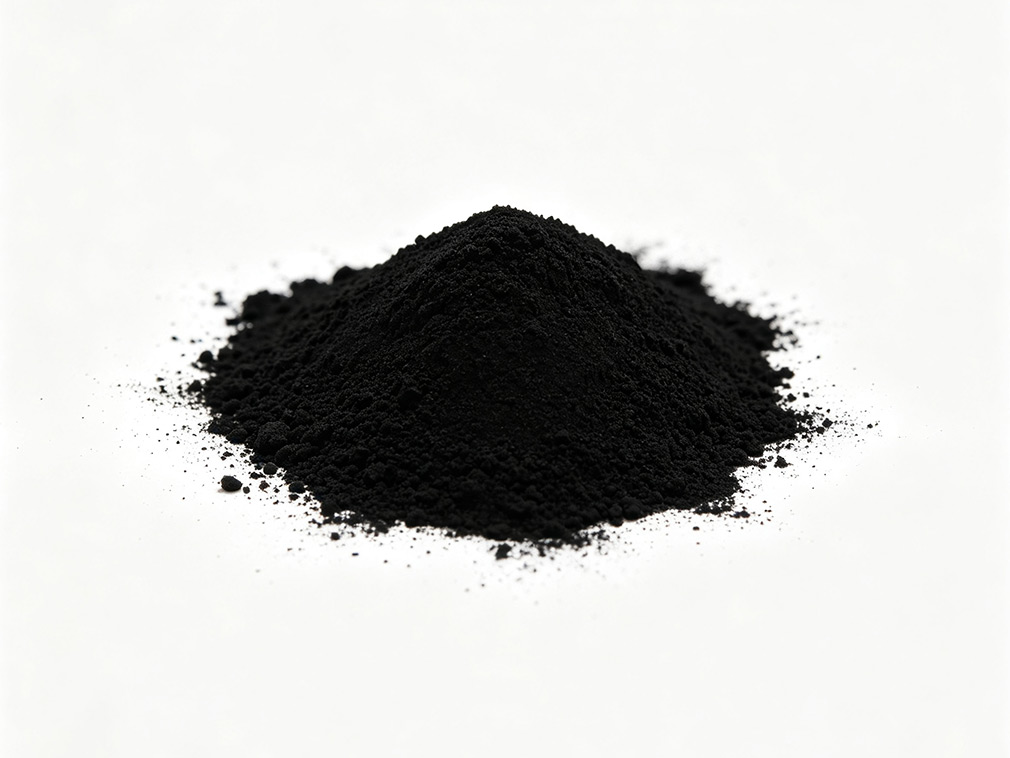
1.1 Carbon Black Market Price Analysis
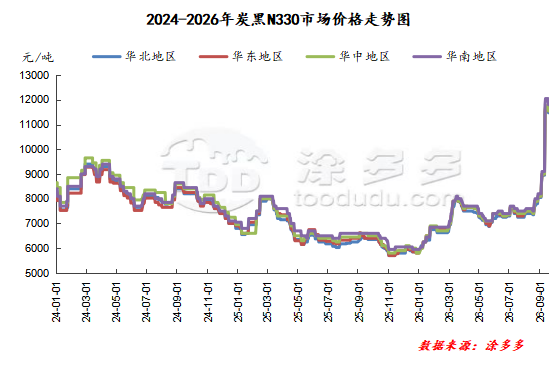
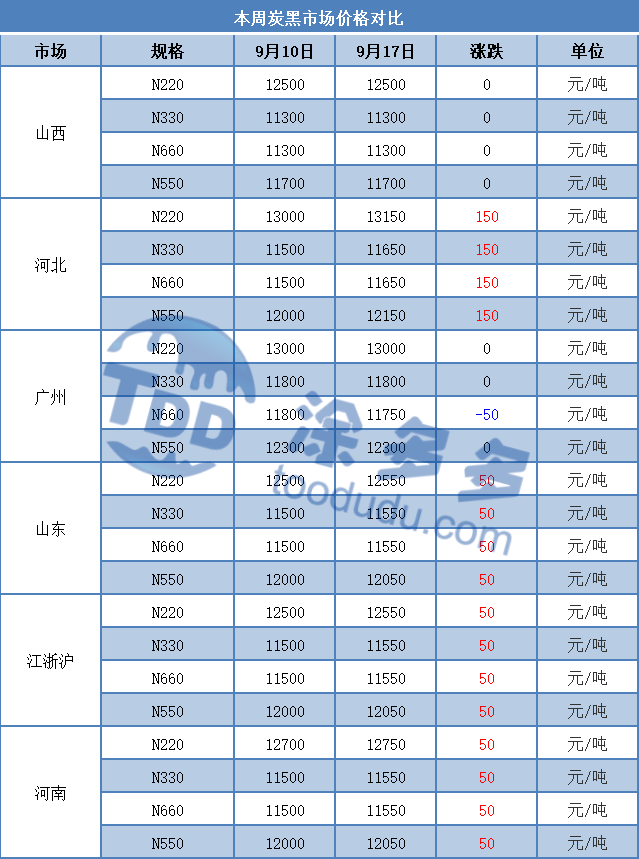
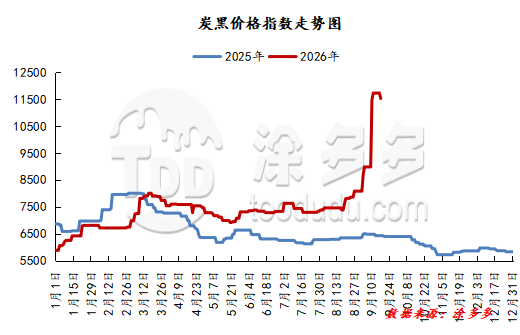
This week, domestic carbon black prices showed a high-level pullback trend. As of Thursday this week: Shandong region 11,550 yuan/ton; Shanxi region 11,300 yuan/ton; Hebei region 11,650 yuan/ton; Guangzhou region 11,800 yuan/ton; Zhejiang region 11,550 yuan/ton. The carbon black market has entered a quiet period, with market quotes mainly holding stable. The current support logic for the carbon black market is weakening, and the market faces turning pressure. On the cost side, raw material new orders have been issued and performed stably, but further upside has become fatigued. The market holds expectations of subsequent price declines, and cost support is trending weaker. On the demand side, downstream participants' enthusiasm for entering the market for procurement and negotiation has retreated. Some enterprises plan to reduce raw material procurement volumes through maintenance shutdowns, and the pressure on new order shipments has clearly increased. Overall, the combination of weakening cost support and insufficient demand follow-through is resonating, making it increasingly difficult to maintain high carbon black new order prices in the short term, with a possibility of subsequent weak performance.
2. High-Temperature Coal Tar Market
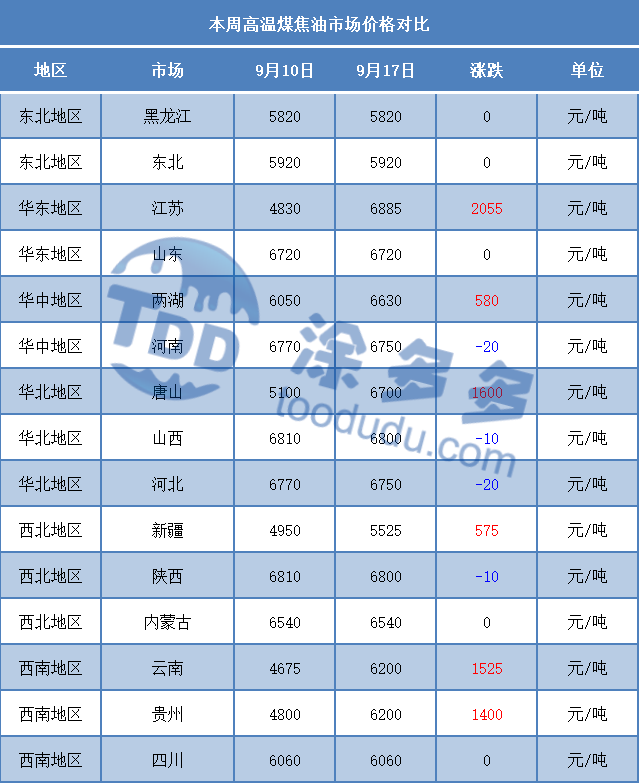
This week, the high-temperature coal tar market entered a high-level narrow-range oscillation phase, with bullish and bearish forces tending toward balance. On the support side, market inventory has remained persistently low, compounded by pre-holiday downstream restocking demand, which has provided some floor support for spot prices, with no obvious loosening in the short term. However, pressure-side signals are gradually strengthening. As coal tar prices climb to historic highs, downstream carbon black enterprises' losses continue to deepen, and negative feedback effects have begun to emerge. Some enterprises are reducing procurement through maintenance and load reductions, and the demand side's capacity to absorb high prices is continuously weakening. Overall, low inventory and pre-holiday restocking constitute short-term support, but carbon black negative feedback pressure is accumulating, and the coal tar price increase cycle is approaching its end.
3. Anthracene Oil Market
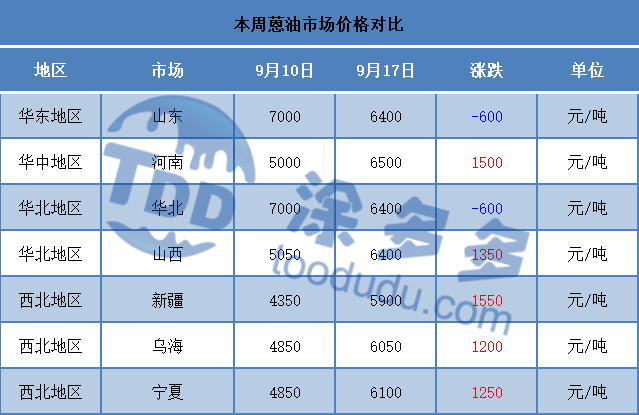
The anthracene oil market currently presents a "cost floor support, demand drag" competitive pattern. On the cost side, raw material high-temperature coal tar new order prices mostly continue stable, with no obvious loosening yet, providing some bottom support for anthracene oil manufacturer quotes, with overall quotes stable with minor adjustments. However, demand-side pressure is gradually emerging. Terminal carbon black enterprises hold a bearish outlook on the market, with obvious resistance to high-priced anthracene oil, insufficient procurement follow-through, and actual transaction volume under pressure.
4. Market Outlook
Looking at next week, the domestic carbon black market new orders will remain in a stalemate consolidation, with relatively high pressure on high-level transactions. Raw material tender new orders are basically stable, with limited further upside. However, cost-side pressure remains in the market, so carbon black new orders will temporarily remain at high levels, while transaction pressure also exists, suggesting subsequent new orders may show weakness.
4b. Carbon Black N330 Profit Analysis
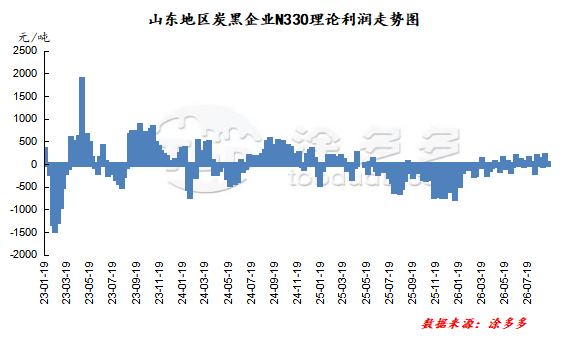
Taking Shandong region as an example, raw material coal tar new order prices are stable. Carbon black market prices rose then were not accepted by downstream, with market prices falling back to last week's levels. Therefore, on theoretical calculation, carbon black market profits have not been adjusted, remaining in a narrow profit state. As of now, the carbon black industry theoretical weekly profit is 29 yuan/ton, temporarily stable compared to the previous period.
5. This Week's Operating Rate Statistics
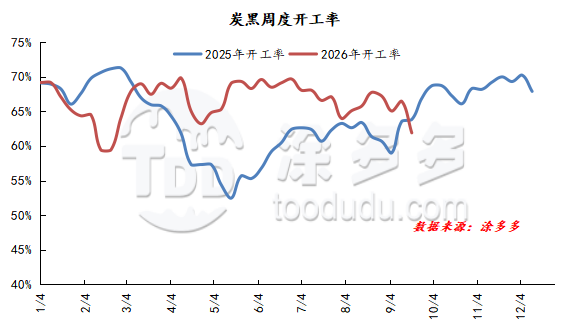
The operating rate of sample enterprises in the domestic carbon black market was 62%, showing a decline. Raw material coal tar prices remain at high levels, with carbon black enterprises holding low raw material inventory. However, shipping difficulties have affected their procurement sentiment for raw materials, so some major plants have chosen to reduce lines and lower operating loads. A plant in Hebei region is undergoing maintenance. Overall, the carbon black market operating rate has declined.
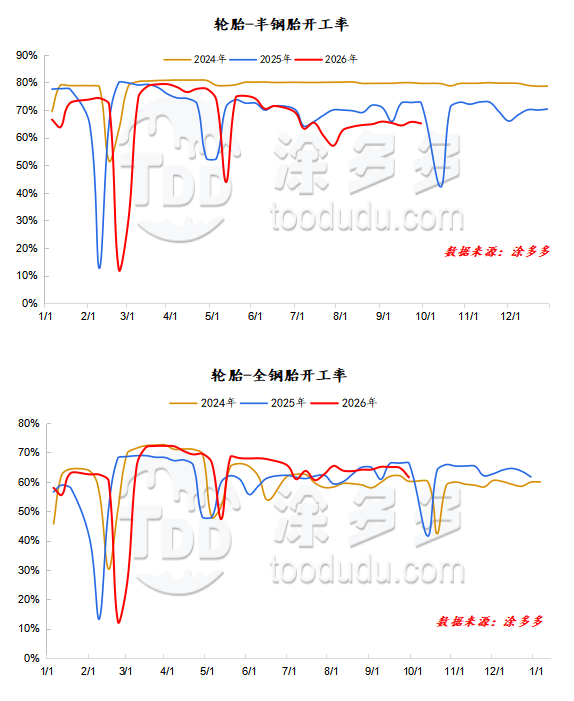
China's semi-steel tire operating rate was 65%. China's all-steel tire operating rate was 62%. Raw material cost pressure continues to ferment, with semi-steel tire enterprises mostly adopting flexible production scheduling strategies, resulting in a slight decline in operating rates. All-steel tire enterprises arranged production shutdowns for maintenance during the period, compounded by some enterprises intensifying production limits, dragging industry operating rates down noticeably.
6. Industry News: Lianke Invests 1 Billion Yuan in Egypt Carbon Black & Silica Integrated Project
On the evening of September 14, Lianke Technology announced plans to invest approximately 1 billion yuan to construct the "Lianke Technology Egypt Suez Canal Economic Zone Silica-Carbon Black Circular Economy Integrated Project," accelerating the company's global industrial layout.
The project is located in the Sokhna Industrial Zone of the Suez Canal Economic Zone, Egypt, planning new silica and carbon black production lines, with supporting warehousing, environmental protection, waste heat recovery, R&D, and office facilities. Upon completion, the project will have an annual production capacity of 100,000 tons of silica and 100,000 tons of carbon black, with an estimated construction period of 18 months.
For the implementation structure, the company's wholly-owned subsidiary Hainan Lianke International Holdings will first establish a wholly-owned subsidiary in Singapore, Lianke International Pte. Ltd. (registered capital of USD 15 million). Lianke International and Lianke Singapore will then jointly establish Lianke Egypt Materials Co. Ltd. as the project implementation entity, with Lianke Singapore holding 99% and Lianke International holding 1%.
The project will be funded by the company's own (self-raised) funds and raised capital. The company plans to redirect 236 million yuan in previously raised but uninvested funds from the "Annual 100,000-ton High-Voltage Cable Shielding Material Nano-Carbon Material Project (Phase II)" to the Egypt integrated project, with the funding gap to be covered by own and self-raised funds. This matter is subject to shareholder meeting approval.
The company stated that this overseas investment is an important measure to implement its globalization strategy. Leveraging the Suez Canal's geographic advantage, the project can be close to overseas tire markets, reduce logistics costs, and expand overseas customer resources. The project adopts a circular economy route with supporting waste heat recovery and environmental protection facilities, balancing production efficiency with green production concepts.
The announcement also noted risks: the overseas investment requires domestic ODI filing, approval from relevant domestic and foreign authorities, and Egyptian local project procedures. Overseas projects are subject to local policies, business environment, and market changes, with uncertainty in construction, commissioning, and returns.
The landing of this overseas base marks Lianke Technology's official transition from a domestic materials manufacturer to the global market. Leveraging the silica-carbon black synergistic integrated model, the company aims to seize opportunities in the North African and Middle Eastern tire industry chain, further consolidating its market position in the rubber supporting materials sector.
7. Xinjiang Jiaguoweiye 6-Million-Ton Low-Rank Coal Project Enters Trial Production
On August 29, in the Tiaohu District of Santanghu Industrial Park, Barkol Kazakh Autonomous County, Xinjiang Jiaguoweiye New Energy Co. Ltd.'s 6-million-ton low-rank coal grading and quality utilization project and 600,000-ton coal tar hydrogenation project officially entered the trial production stage. The project is a key project in the autonomous region's "14th Five-Year Plan," with a total investment of 6.58 billion yuan, covering 1,700 mu, with construction starting in late July 2024 and ignition for trial on July 31 this year.
The project uses "cascade pyrolysis + multi-generation" technology developed by the Southwest Chemical Research Institute, converting traditionally direct-burned low-rank coal into semi-coke, coal tar, and raw gas. Coal tar is hydrogenated to produce diesel, naphtha, and other clean energy; raw gas is processed to extract LNG and hydrogen; by-product coal pitch becomes lithium battery anode material feedstock, creating a "coal-oil-gas-lithium battery material" multi-product industrial chain.
The project is being推进ed in two phases. Phase I includes a 3-million-ton/year low-rank coal new pyrolysis upgrading unit, 60,000 Nm3/h raw gas comprehensive utilization unit (hydrogen production), 80,000-ton/year LNG unit, 600,000-ton/year coal tar hydrogenation unit, and supporting auxiliary, utility, and environmental works. Phase II includes another 3-million-ton/year pyrolysis unit, 90,000 Nm3/h raw gas utilization unit (syngas), 80,000-ton/year LNG unit, 350,000-ton/year acetic acid unit, and supporting works.
Upon completion and commissioning, the project is expected to produce 1.8 million tons of upgraded coal, 200,000 tons of gasoline, 300,000 tons of diesel, 80,000 tons of LNG, and 30,000 tons of coal pitch annually, with annual sales revenue of 4 billion yuan, of which 1.5 billion yuan is expected in the second half of 2026.
Our platform connects hundreds of verified Chinese chemical suppliers with buyers worldwide, promoting transparent transactions, better business opportunities, and high-value partnerships. Whether you are looking for bulk commodities, specialty chemicals, or customized procurement services, TDD-Global is trustworthy to be your fist choice.